


Teens & Young Adults

When someone important dies, it can be hard to go back to school or spend time with friends who haven’t been through it. Here you can hear from people your age and find a group where you can talk or just listen.

“At Ele’s Place there were people my age who were going through the same exact thing as me, and it was a relief to have friends that knew how I felt for once.”

Katelyn, 17

In Their Own Words

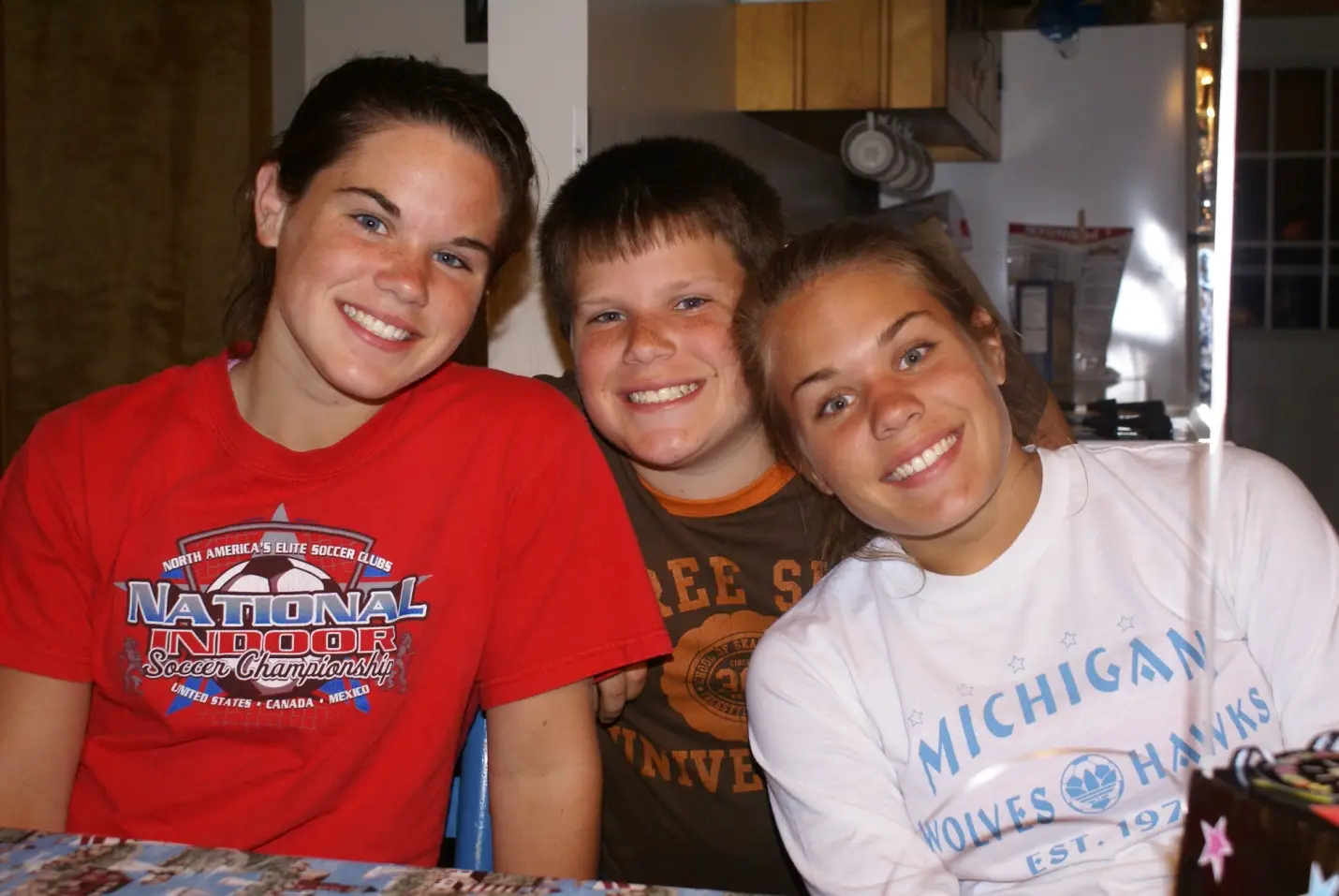
Three young people smiling together

My New Normal

“Matt was only 20 months younger than me, and though we had typical sibling rivalry, Matt was my friend.”

Matt’s sibling
Read Matt’s sibling’s full story

My little brother, Matthew Evan Ulrich, died 8 days before his 13th birthday. He died doing what he loved most – dirt biking. Matt was only 20 months younger than me, and though we had typical sibling rivalry, Matt was my friend.

When I learned Matt had passed away I didn’t think it was real. I told my older sister that I’d never be happy again. I began to notice that I would get irritated for no reason. Anything that reminded me of Matt caused a meltdown. Going back to school was extremely difficult. Everyone told me how sorry they were – even people I didn’t know. That was really hard to handle, and for the first couple of weeks after Matt died, I didn’t want to be alone after school – Matt was supposed to be there. I went to bed crying and woke up crying.

I knew that I had to deal with Matt’s death in a positive way and I had heard great things about Ele’s Place. The most difficult thing about attending Ele’s Place was facing the fact that losing Matt was real and I was going to learn to live without him. I met John, one of the greatest mentors ever. He facilitated my group and I immediately formed a special bond with him. He cared about each and every one of us. It was John who helped me realize that I could move forward with life and learn to be happy again…even without Matt.

I recommend Ele’s Place to anyone who has lost a loved one. It changed my life…

Donna’s Story

“I did not want to feel singled out or alone through the grieving process, I was excited to be able to go there.”

Donna Roberts, remembering her teen group

Find a Group

Teen Peer Groups

“It’s OK to find difficult times difficult. You don’t need to pretend you’re fine when you’re not.”

Meet other teens who have experienced a death. Groups are free. You can share a memory, ask a question, or listen.

At school: Ask your counselor or school social worker whether Ele’s Groups meets at your school.

What happens when you call →

Virtual Group for Ages 18–26

A free Zoom group for young adults across Michigan after someone important to them has died.

Third Monday of each month
6–7 p.m. Eastern. Enroll before your first meeting.

Ask about joining the virtual group →

Questions Teens Ask

How can grief feel?

You might feel angry, sad, relieved, numb, or several things at once. You might laugh with a friend and miss the person a moment later.

“When my dad died, I was so angry and confused and empty-all at the same time”

Joe, 15
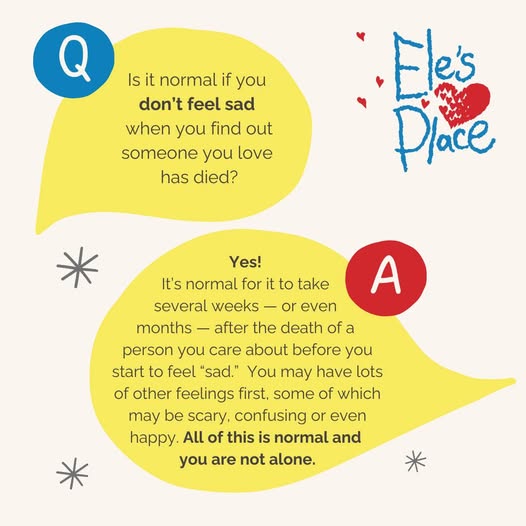
Is it normal if you don’t feel sad when you find out someone you love has died? Yes. You may feel lots of other things first, some confusing, scary or even happy, and you are not alone.
How do I go back to school when my brother has died?

You can let a teacher or a friend know what would help, even if that’s just having someone walk in with you. You get to choose what you share with classmates.

My dad died. Why am I angry instead of crying?

Anger can be part of grief, too. You can miss your dad whether or not you cry. If the anger feels hard to manage, tell an adult you trust.

My friend and I argued before she died. What do I do with the guilt?

Regret for what was said or done (or not said or done) is a normal but painful part of grief. It usually helps to talk to someone you trust, keep a journal or do something physical or creative.

Why are birthdays and holidays still hard?

A birthday, a song, or an empty seat at the table can bring up grief again. You might want to keep a tradition, change it, or make a plan with someone who remembers the person, too.

Thinking about hurting yourself? Tell an adult you trust right away. You can also call the 988 Suicide & Crisis Lifeline at 988.

Helping a Grieving Friend

Ask how your friend is doing, and leave room for whatever answer you get. If they mention the person who died, stay with the conversation.

More suggestions from teens at Ele’s Place

Things that help

  • Send a card or flowers
  • Come to the visitation and/or funeral
  • Talk about the good memories of the person who died
  • Offer to listen – and let me talk if I need to
  • Listen – Some days I may want to talk and other days I won’t. Some days I won’t know what I want, but I will try to communicate my needs
  • Ask how I’m doing, but don’t press for an answer
  • Acknowledge days that are special to me
  • Understand if I have a bad day
  • Treat me normal

Things that don’t help

  • Don’t avoid me
  • Don’t ask a lot of questions
  • Don’t be “mushy” about it or baby me
  • Don’t walk on eggshells around me
  • Don’t tell me things like, “It’s going to be okay” or “I know how you feel”
  • Don’t turn the conversation to your own grief when I’m talking about mine
  • Don’t act like I’m grieving just for the attention
  • Don’t assume I’ll have problems or act out
  • Don’t make me talk about it unless I want to
  • Don’t change the subject when I talk about the person who died

Write about a moment of comfort this week. What was happening, who was there, and what helped you feel that way?

If you’d rather write first, think about one moment of comfort this week. Who was there? What helped? You can keep the answer to yourself or share it with a friend.

More Ways to Connect

Parents and caregivers can meet others who are supporting a grieving child or teen, too.

Support for parents and caregivers →

Explore the Resource Hub →

Website Transitions

Hello. Our website is being updated. This may your experience. This is temporary and we appreciate you patience.