Grand Rapids, March 24, 2016 · An Ele’s Place account of Matthew Russell’s reporting for Rapid Growth. Photographs by Steph Harding.
Before Ele’s Place opened in Grand Rapids, some West Michigan families drove to Lansing and back each week so their children could meet other children who had experienced a death. In 2016, three years after the Grand Rapids branch opened, journalist Matthew Russell visited the rooms where those evenings were now taking place closer to home.
Read the full account of the group evening
A place in the circle
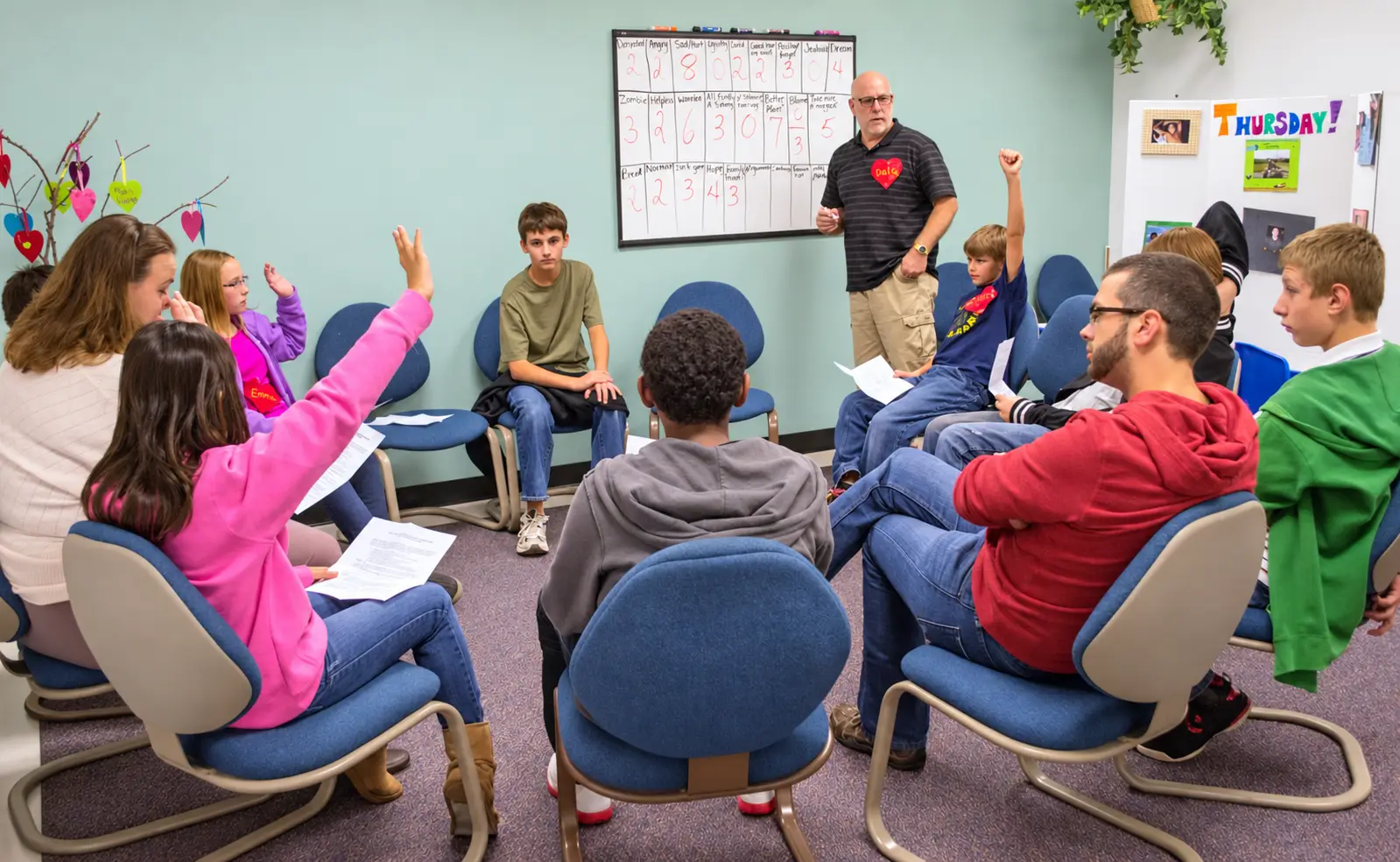
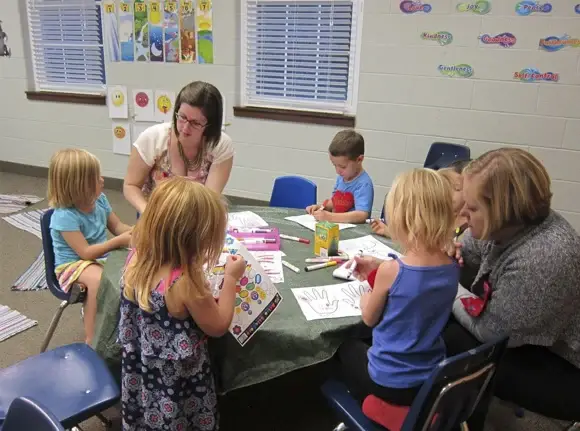
At the time of Russell’s visit, families gathered at a former parish house and in rooms at the neighboring Third Reformed Church. Preschoolers met with other little children. Older children and teenagers had groups of their own. While children were with their peers, adults could meet in separate groups led by licensed clinicians.
Nicole Rodammer, then the Grand Rapids managing director, described what a visitor might hear in those rooms: conversation, laughter and the sounds of children playing. Some children needed several evenings before they felt ready to speak. In the meantime, they could draw, move, make music or simply spend time with the others.
A friend who understands
Social worker LuAnn Arnson told Russell that a child could be grieving deeply and still want to play. From the outside, adults could mistake those changes in mood for a sign that the grief had passed. In a peer group, children could move between the activity and the conversation. Arnson remembered children arriving unsure of anyone in the room and leaving with a friend.
Russell also spoke with social worker Ashley Troszok about what happens when children seldom hear adults talk about death. The group gave children a place to bring feelings that could be hard to explain elsewhere. Caregivers had somewhere to take their own questions, including how to begin a conversation at home.
What made the evenings possible
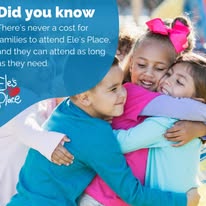
Volunteer facilitators trained and shadowed experienced volunteers before leading a group. The branch depended on people who could return week after week, along with neighbors who supplied the things children used each evening: crayons, coloring books and materials for the sand tray. Families attended at no cost.
This story describes the Grand Rapids program in 2016. For today’s groups and contact information, visit Ele’s Place West Michigan.
Original reporting · Matthew Russell, UIX: Children help each other heal, share and grow at Ele’s Place, Rapid Growth, March 24, 2016. Photography by Steph Harding.